

Virtual tours and immersive experiences for industrial and biotech companies
How a 360° virtual tour lets you show restricted-access labs and plants to clients worldwide. With the real case of HIPRA Biotech Services.
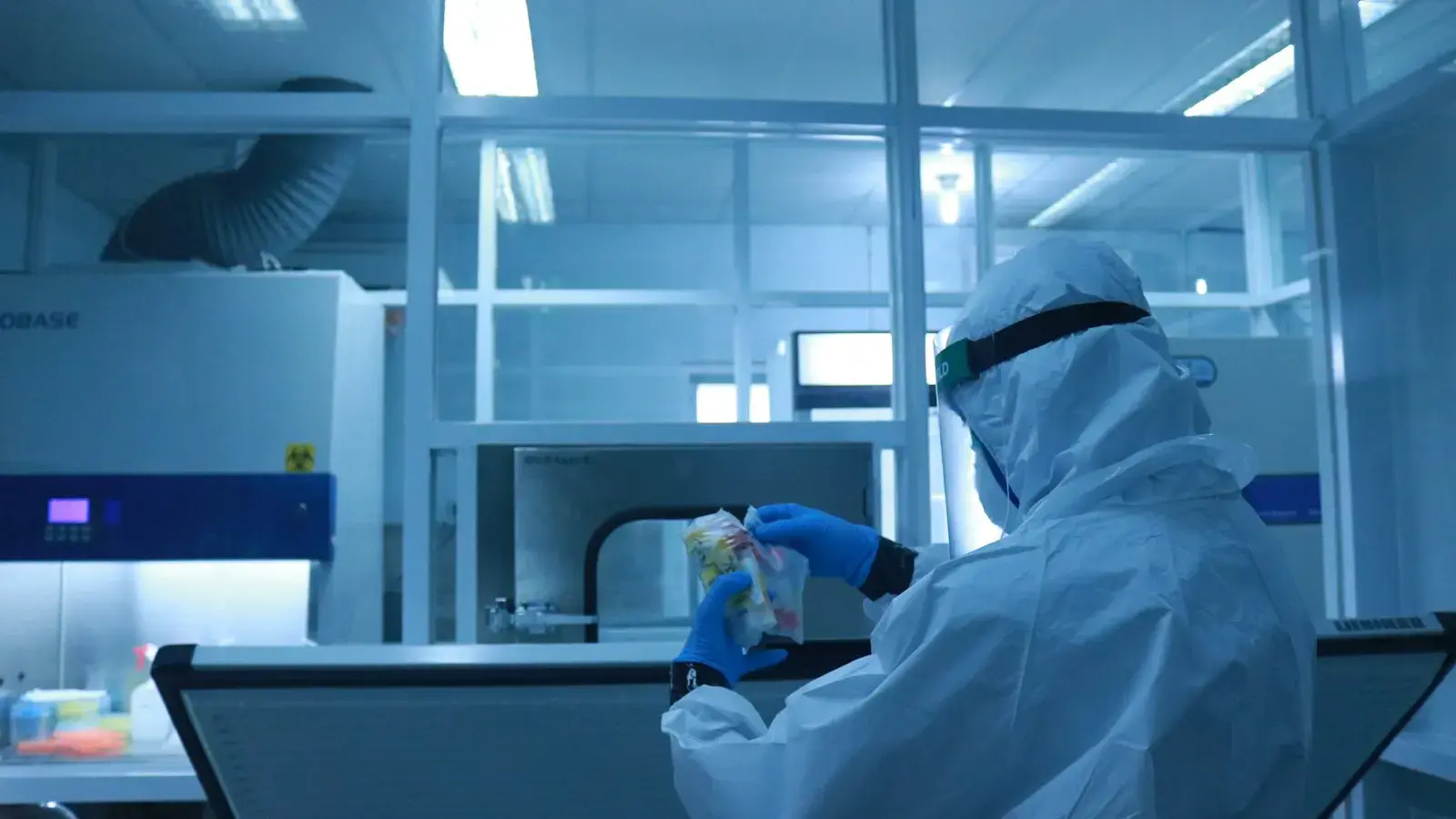
An industrial virtual tour is an interactive 360° walkthrough of a company's facilities — laboratories, production plants, cleanrooms, warehouses — that can be visited from any computer, tablet, phone or VR headset, with information points about every area and piece of equipment. For an industrial or biotech company, it's a way of showing what normally can't be shown: restricted-access spaces, strict biosafety protocols or plants thousands of kilometres away from clients. In this article we explain what it's for, how we applied it for HIPRA Biotech Services and how a project like this is planned.
Why does an industrial company need an immersive experience?
Because in industry — and especially in biotech and pharma — trust is earned by showing your facilities. A client looking to outsource the manufacturing of a product, an auditor or a future employee wants to see how work is done, what equipment is in place and what level of control is maintained. The problem is that these visits are expensive, slow and, in many areas, simply incompatible with production.
- Critical areas have limited access: cleanrooms, cell culture or aseptic filling areas require special gowning, prior training and traceability for every entry.
- Clients are international: flying a team in from another continent for a first contact doesn't always make sense.
- Technical staff time is valuable: every guided visit takes hours away from people who should be producing or researching.
A virtual tour never replaces a physical visit when one is essential, but it handles most first visits, prepares the ones that must happen in person and makes the facilities accessible to everyone who needs to know them.
Case study: HIPRA Biotech Services' 360° virtual tour
In 2025 we produced a 360° virtual tour of the facilities of HIPRA Biotech Services, the biotech services division of an internationally active company based in the Girona area. It was a demanding brief: to show a biotech production environment in detail to clients and partners around the world, in English, with image quality worthy of the brand and in full compliance with internal protocols.
The result is a walkthrough with more than a hundred panoramas organised by area, with a menu that lets visitors jump straight to each one:
- R&D: research and process development laboratories.
- Cell culture and microbial: upstream and downstream stages, with bioreactors, fermenters and chromatography systems.
- Aseptic fill & finish: formulation, a filling line with isolator technology and automated visual inspection.
- Quality control: instrumental room and sterility room.
- Packaging: secondary and tertiary packaging.
Each scene includes points of interest identifying the main equipment, so a client's technical lead can understand the plant's capabilities without ever setting foot in it. You can see the project on our projects page.
What is a virtual tour used for in an industrial or biotech company?
Once it's built, the tour becomes a cross-functional tool used by several departments:
- Sales and business development: it's the "visit" that goes with a commercial proposal or a first video call with a prospective client in another country.
- Onboarding and training: new staff can learn the plant layout, circuits and equipment before going in for the first time.
- Audits and quality visits: it helps prepare an on-site audit or complement its documentation, because the auditor arrives already knowing the space. It doesn't replace the formal requirements of any inspection, but it makes preparation more efficient.
- Biosafety: fewer unnecessary entries into controlled areas means lower contamination risk and fewer production interruptions.
- Trade fairs and conferences: on a stand, a tour on a big screen or in a VR headset draws visitors in and lets you show the entire plant in a few minutes.
- Talent and employer branding: showing where people work is a powerful argument for attracting technical profiles.
Matterport or 360° photography: which technology should you choose?
There are two main ways to build a virtual tour, and the choice depends on the goal:
- Matterport (3D scanning): a special camera captures the space and generates a navigable three-dimensional model, with a "dollhouse" view, floor plan and measurement tools. It's ideal for spaces where geometry matters: warehouses, offices, properties or hotels. It runs on a subscription platform.
- High-resolution 360° panoramic photography: professional-quality panoramas are shot and joined in an interactive player with menus, points of interest, videos and multiple languages. It offers more control over lighting, retouching and interface design, and can be hosted wherever suits you.
For HIPRA we chose high-resolution panoramas with a customised player, because we prioritised image quality in environments full of stainless steel and artificial light, plus clear area-based navigation for a technical audience. Our 360° virtual tour service works with both options.
How do you build a virtual tour in a plant with strict protocols?
The technical side matters, but what determines success in industrial settings is planning. This is how we approach it:
- Define goals and audience. A tour for pharma clients is not the same as one for internal training: areas, copy and language all change.
- Confidentiality. We agree on what can and can't be shown: proprietary processes, screens, documents or labels. If needed, we sign a non-disclosure agreement.
- Coordination with quality and safety. We set non-production time slots, gowning requirements, cleaning or disinfection of the camera gear and entry routes for each area.
- Capture. We photograph each point of the route with multiple exposures to handle the lighting contrasts typical of labs and plants.
- Post-production. We retouch, unify colour and remove any sensitive information visible in the images.
- Interactive build. We organise scenes by area and add points of interest, technical copy reviewed by the client, logos and languages.
- Publishing. We embed the tour on the website, make it available through a direct link for the sales team and prepare it for trade-fair screens or VR headsets.
How much time and investment does it take?
It depends mainly on floor area, number of scenes and access restrictions. A small space can be done in a single day of capture; a full plant with several controlled areas needs weeks of planning and several sessions. Since every project is different, we prefer to do a site visit or a meeting first and then give a fixed quote. Think of it as an investment that keeps paying off for years in sales, training and communication, and that can be updated area by area when equipment changes.
How do you measure whether the tour works?
A virtual tour is a digital asset, so it can be measured. We recommend connecting it to your website analytics to see how many people open it, how long they spend in it and which areas they visit most. It also helps to use separate links for each use (commercial proposals, trade fairs, internal training) and to ask new clients whether they saw it before getting in touch. With this data, the sales team knows which spaces generate the most interest and can prepare each meeting better.
Which mistakes should you avoid?
- A walkthrough without a script: a tour that is just a stroll through panoramas explains nothing. It needs a logical order and points of interest with real content.
- Leaving confidentiality until the end: reviewing sensitive information after capture is far more expensive than planning for it beforehand.
- Keeping it hidden: a tour that isn't linked from the website, commercial proposals and email signatures is a tour nobody sees.
Want to show your facilities to the world?
If your company has a plant, a lab or facilities that say a lot about your capabilities, a virtual tour is one of the most durable sales tools you can have. We work with industrial, biotech and service companies in Girona, the Costa Brava and Barcelona. Tell us about your project or message us on WhatsApp and we'll advise you on the best technology for your case.
Frequently asked questions
What is an industrial virtual tour?
It's an interactive 360° walkthrough of a company's facilities, with information points about areas and equipment, that can be visited from a computer, phone, tablet or VR headset.
Can a virtual tour be made in a cleanroom?
Yes, in coordination with the quality and safety teams: non-production time slots, appropriate gowning and cleaning or disinfection of the camera gear according to the plant's protocols.
What's the difference between Matterport and a 360° photo tour?
Matterport generates a navigable 3D model with floor plan and measurements, ideal when geometry matters. 360° panoramic photography gives more control over image quality, retouching and interface design.
How is confidential information protected in a virtual tour?
What can be shown is agreed before capture, a non-disclosure agreement is signed if needed, and any sensitive screen, document or label is removed in post-production.
Does a virtual tour replace an on-site audit?
No. It helps prepare the audit and complement the documentation, but it doesn't replace the formal requirements of any inspection.
Let's talk about your project
Request a quote